Posts filed under ‘Evaluation methodology’
Systems thinking in evaluation
Systems thinking is a “buzz word” we often hear in evaluation. To help us understand it better, seasoned evaluator and thinker Bob Williams has produced a really helpful workbook, read more here from Bob:
“Systems thinking is a field, not a single methodology. Indeed, just like the evaluation field, the systems field is bursting with methodologies. Some of them are especially relevant to evaluation. Critical Systems Heuristics (CSH) is one of them, primarily because it focuses explicitly on the value and worth of an intervention. It helps identify what is (or was) the right thing to do, reveals the power that underpins that claim to rightness, and what makes, or made, an intervention legitimate and sustainable. It also helps identify appropriate evaluation criteria and questions. Over the years, it has had a powerful impact on my evaluation practice.I’ve just published Values in Action: A Critical Systems Workbook, which takes you through a process of learning how to use CSH. This includes the design and analysis of evaluation, determining evaluation criteria and evaluation questions, stakeholder analyses and the construction and investigation of Theories of Change.
It is donationware. In other words, you can download the 120-page workbook (complete with exercises) for free or donate to the cost of design and production.“
You can download the workbook here>>

New guide: Equitable Communications Guide for Evaluators
The Equitable Communications Guide is a great new resource for evaluators. Developed by Innovation Network, the Equitable Communications Guide is designed for evaluators in the social sector, but has relevant lessons for anyone looking to improve their communications! The guide explores how to communicate equitably, center the experiences of others, and convey the meaning behind key messages. Download the free guide here: https://innonet.org/news-insights/resources/equitable-communications-guide/

How to – outcome monitoring and harvesting
Often it’s useful in an evaluation during data collection to define or check what the given intervention sought to achieve in terms of outcomes – both intended and unintended. One approach that has become popular is outcome monitoring or harvesting. The World Bank has produced a very useful guide in this area that provides practical guidance – do take a look!

Nudge theory and evaluation
There has been a lot of talk about “nudge theory”- basically people being guided, encouraged and nudged towards the right decision, rather than being told – and now the evaluation unit of the UN agency, WIPO has produced a guide on how nudge theory can apply to evaluation – interesting reading!

Implications of COVID-19 on evaluation
The ILO have published useful guidelines on “Implications of COVID-19 on evaluations in the ILO: Practical tips on adapting to the situation“. The guidelines are well worth a read as they can provide guidance for many of us carrying out evaluations remotely these days.

CART principles for monitoring
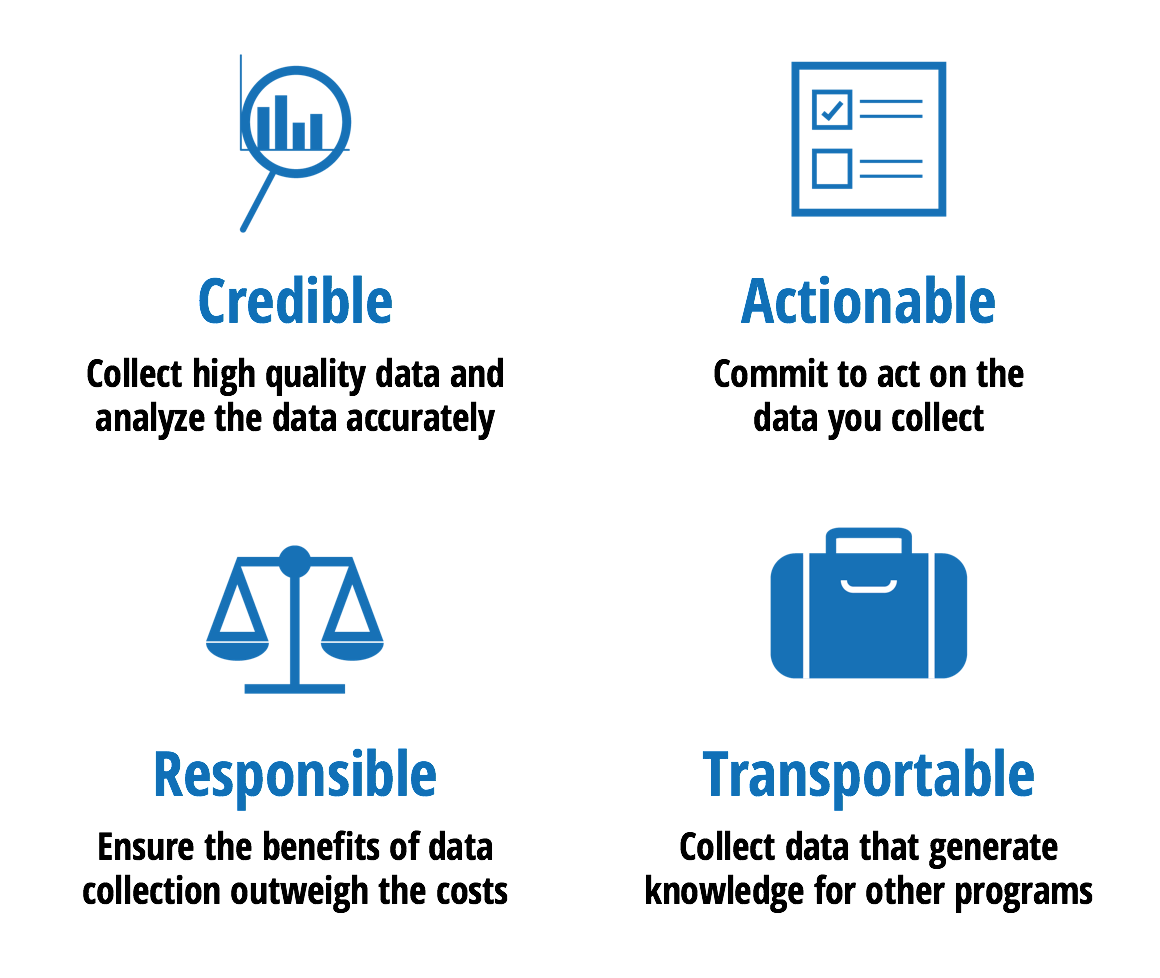
Innovations for Poverty Action have developed some useful guidance on activity monitoring and evaluation based on their own CART principles: credible, actionable, responsible, and transportable (see summary graphic below).
Particularly useful for those interested in monitoring which is an issue many organisations find challenging. Read more here>>
Evaluation during COVID19 – infographic
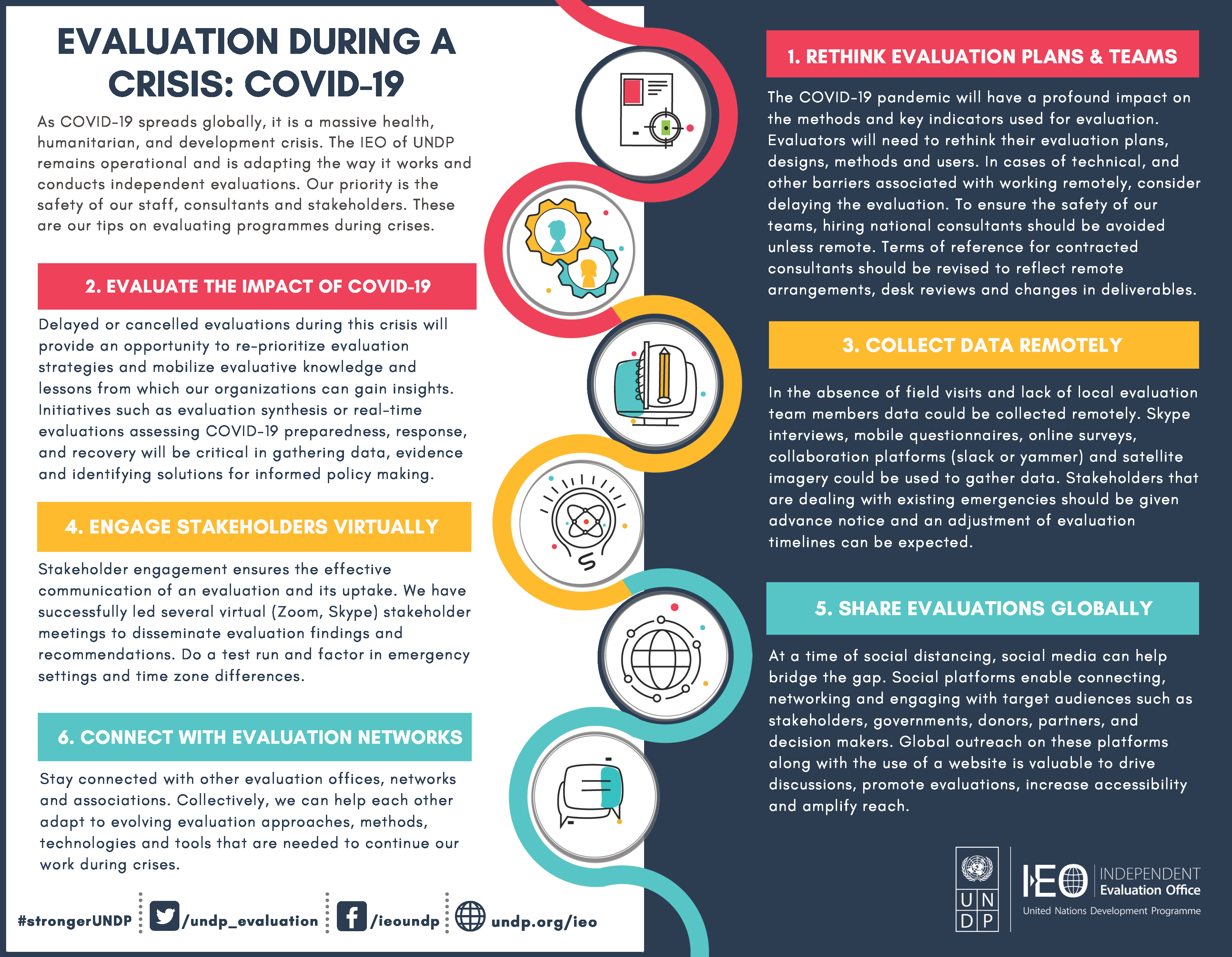
Here an informative infographic from UNDP independent evaluation office on evaluation during COVID19 (view the pdf version here).
Evaluation and COVID19
There have been many useful and interesting articles on how evaluation can adapt and cope with the current COVID19 pandemic. Here is a collection of what I’ve found to date:
Practical tools/advice:
Conducting phone-based surveys during COVID 2019
A quick primer on running online events and meetings
Covid-19 crisis: how to adapt your data collection for monitoring and accountability
Think pieces:
Zenda Ofir: Evaluation in times of COVID19 outbreak
World Bank: Conducting evaluations in times of COVID-19
Chris Lysy: The Evaluation Mindset: Evaluation in a Crisis
M Q Patton: Evaluation Implications of the Coronavirus Global Health Pandemic Emergency
New and better evaluation criteria
The OECD/DAC evaluation criteria – the main guidance used for most evaluations has been revised. Following a broad consultation, the revised criteria have been published (pdf).
The main changes are the addition of a new criterion: Coherence; a better explanation of how to use the criteria; and a recognition that the criteria are used across many sectors and not only for the development sector. The explanatory document (pdf) is well worth a read.
A framework for context analysis
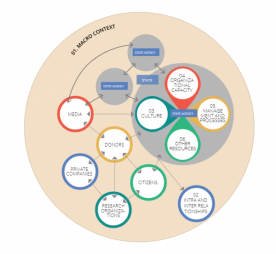
Here is an interesting tool to help with context analysis: ‘Context Matters’ framework – to support evidence-informed policy making. The tool is interactive and you can view the different elements from various perspectives. Designed to support the use of knowledge in policy-making, it could also be of interest to researchers and evaluators as an analytical tool for contexts.
View the interactive framework here>>
Read more about the framework here>>
Thanks to Better Evaluation for introducing this new resource to me.
 intelligent measurement