Award for Excellence in PR Measurement & Evaluation
 If you are “into” PR/communication research and measurement, and have used it extensively in one of your PR campaigns this past year, you might want to consider entering the Jack Felton Golden Ruler Award for Excellence in PR Measurement & Evaluation. Entries of all types are welcome – including research using social media! The award recognizes superb examples of research used to support public relations practice. Winners are feted at the Institute for Public Relations Summit on Measurement in October in Portsmouth, NH, and it’s quite a big deal.
Be quick – Entries are due August 15th. Here’s How to Enter, and see these examples of previous winners’ entries: Padilla Speer Beardsley’s Winning Entry 2007 or Shell’s Award Winning Entry 2008 for ideas – and there are more on the site – also good if you want to see some best practices in communication / PR evaluation.
Is it possible to create a ROI on communication?
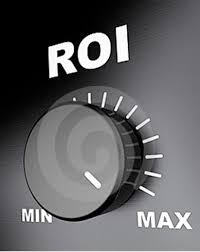 Is it possible to create a ROI on communication? Only if you pursue truly strategic goals…
Given the huge interest in a workable tool to measure ROI on communication, and the amounts of hot air generated on the subject in the two Berlins, I would like to propose a simple blueprint:
It goes like this:
Calculate the value of whatever it is you are trying to promote, sell or protect and the cost of failure.
From this you allocate a reasonable proportion as a budget, enough to enable success at selling, promoting or protecting, etc., recognising the price of failure. (In other words, if it’s not strategic or crucial, think about whether you really want to do it at all).
Measure your inputs – time, resources, materials.
Measure your outputs qualitatively (reach, tone, influence, prestige)
Measure your outputs quantitatively (impressions, views, footfall etc).
You may need to assign a value to your outputs, because PR is not the only game in town. Other communications disciplines will also have played their part.
Measure your outcomes. Not as tricky as it seems. Did you sell any more product? How many people came to the event? Did you save the chemical plant from closure? What was the value?
Don’t get hung up on opinion shifts, unless the shift contributes directly to the achievement of your strategic goals. If it does, then measure it.
I leave it to someone cleverer than me to calculate the golden ratios and percentages and a single number index that will make this work.
It may not be ROI, but it will be a measurement which could become meaningful.
I quote Katie Paine:
“If everyone is so darn hot on ROI, why aren’t they measuring it? I say the reason is, again, lack of knowledge about measurement and measurement tools. Because, there are measurement tools out there that will provide ROI (albeit, not simple or easy to use). So if they really, truly wanted ROI, then they would use measurement techniques that would allow them to calculate it. But instead, they focus on exposure-based methods like clippings and AVEs, because they are afraid of actually learning what the ROI of their programs is. They might find that their programs yielded considerably less R than the I that was put into them.”
I Agree. It’s because so many communications programmes do not have truly strategic objectives in the first place. “Raise awareness”, Increase visibility”, “improve customer feedback” are not strategic objectives, and it is impossible to calculate the value of success or the cost of failure.
Convince legislators on a particular course of action, convince a population that a plant should or should not be built, sell x million units of a new product, persuade us that a particular engineering material is non-carcinogenic and safe, or that a proprietary medicine works – now those are what I call strategic objectives.
They would all merit very grown up budgets, and it would be a dereliction of duty not to measure whether taxpayers or shareholders funds had been wisely spent.
Richard
Berlin stirs up a hornet’s nest

Did you know there are two Berlins? The other is in New Hampshire, USA, and is where Katie Paine, a *PR measurement guru / blogger / twitterite* is based.
Katie has been busy in Berlin, NH writing up her thoughts on what was said in Berlin, Germany at the recent Measurement Summit, and in particularly on the global measurement survey of communication professionals undertaken by Benchpoint for the Summit.
Highly recommended!
Richard
Measurement is an integral part of PR – global survey
As mentioned on K.D Paine’s blog and the Institute for Public Relations website, a new international survey of PR professionals has found that more practitioners than ever are measuring the effectiveness of their communications programmes.
The survey carried out by Benchpoint for AMEC, the international Association for the Measurement and Evaluation of Communication and the Institute for Public Relations, was presented at the 1st European Summit on Measurement in Berlin held from June 10-12 and attended by nearly 200 delegates from 28 countries.
The survey was carried out amongst a sample of 520 PR professionals internationally.
Key findings were:
- The overwhelming majority of PR professionals, 88%, believe measurement is an integral part of the PR process (70% believe this strongly).
- While 77% of respondents claimed to measure their work compared with 69% in a similar survey five years ago, the survey results show that the PR profession are still not agreed on the best tools and methodologies.
- Measuring ROI (return on investment) on communications is viewed as an achievable goal by the overwhelming majority of professional communicators taking part in the survey. There is, however, very strong agreement that it is possible to calculate ROI on communications, and that demonstrable ROI would enhance the budgets (and status) of PR practitioners.
- PR Professionals still tend to judge their success criteria more by their ability to place material in the media rather than on the impact such coverage might have on shifting opinion, awareness, or moving markets, although there is evidence that this is changing.
- The survey found that the tools used by PR professionals includes press clippings – still the favourite – closely followed by AVEs (Advertising value equivalent) and more rigorous tools including Internal Reviews, Benchmarking, and the use of specialist media evaluation tools. Various forms of opinion polling and focus groups also remain as popular tools.
Read more findings from the study>>
Glenn
Mor-on Twittering
 Following from my post about AVE’s and twittering in conference sessions earlier this week, it seems that some of the twitterers were not just against AVEs, but also against anyone defending them.
My point is how can you hear the argument if you are up to you neck in negative twitters – not just with other people in the room, but the rest of the world too? Also, be careful. Libel lawyers also subscribe to Twitter.
Basically, the presentation was:
a) Asked how many people in the room us AVE’s — almost everyone raised their hands
b) Given that it is a wide-spread practice, here are some ideas about how to use and not use them:
– no multipliers unless verified
– adjust for quality of placement
– possible use as a predictor of sales based on some recent experimental modeling work
– don’t call it the value of PR, call it what it is — comparable cost of buying the space as advertising, a cost that may be the perceived minimum value to the advertiser as a contribution to their business. This assumes the market for advertising is one that functions as an effective market with complete information (ie negotiated rates, not ratecard).
The presentation neither endorsed nor deplored the use of AVE’s, but instead recognized that its use is widespread. There may be reasons to use that approach, and if one does use it here are some do’s and don’ts…. (get the presentation by emailing David.Rockland@ketchum.com)
Richard
Thoughts from the Berlin Measurement Summit
 The 1st European Measurement Summit was a great success. Delegates are busy doing a survey (organised by Benchpoint), and the feedback is looking very positive.
My Highlights:
Neil Martinson, head of press and PR in the UK Government’s Central Office of Information (COI), spends £25million (€29.3 million) on PR every year, so is fairly interested in knowing which half is wasted. He asked five media measurement and evaluation specialists to do some test measurements on a recent campaign. The result? Five very different measurements, and no agreement on criteria or methodology.
David Rockland’s sprited defence of AVE’s (Advertising Value Equivalents). Actually, it’s quite a good measure of penetration, reach and performance. The only trouble is the V word. People manipulate the figures to give the impression that editorial is worth more than advertising, which is hardly objective or honest. And no two people seem to do it the same way (see above) But there has to be a way of integrating this figure with other measures to give a true index of success. By the way David is MD of Ketchum’s global research network, and knows a thing or two. Methinks the detractors are a little over the top on this one.
Social Media. Half the conference were struggling to understand what Social Media is and how to use it, while the other half were on line to each other commenting on what each speaker was saying, without the bother of joining in the discussion with other delegates. I was chuffed when the delegate in front of me started reading this blog during one of the presentations. Should I join Twitter? Or is it just people shouting, and no-one else listening?
I shall be returning to more serious content in future posts. But meanwhile, please comment or contribute to the ongoing debate.
Richard
Latest trends in communications evaluation
 At the AMEC Measurement Summit in Berlin, Richard Gaunt, co-author of this blog (pictured next to Glenn O’Neil, co-author at the Summit), presented some key findings of a survey on evaluation practices amongst communication professionals worldwide (0ver 500 respondents). Some of the key findings were:
- 77% of communication professionals are doing some type of evaluation
- Most communication professionals are measuring “outputs”, using media clipping services to monitor visibility
- Two clear groups emerge amongst communication professionals, those who are interested in measuring “outputs” (distribution, number of media mentions) and those who are interested in measuring “outcomes” (changes to knowledge, attitudes and behaviour).
We will be posting more results in the coming days…
Photo – blog authors Glenn and Richard at the AMEC Measurement Summit – photo by K D Paine, see more photos from the Summit >>
Communication evaluation – recession proof?
In a new report released by the International Association for the Measurement and Evaluation of Communication, one of the findings is that a large majority of clients are demanding greater proof of programme effectiveness, with 77% of AMEC members identifying this trend. At the same time, clients are becoming more price sensitive:
Key results of the study include:
- Increasing client interest in measuring social media reported by 92% of AMEC members;
- Clients becoming more price sensitive (92%);
- 69% of members taking part in the study also report that procurement specialists are becoming more involved in the purchase of measurement and evaluation services.
Presenting campaign evaluation at Berlin Summit
 I’m happy to announce that I will be speaking at the forthcoming European Summit on Measurement, June 10-12 in Berlin, Germany. My presentation will be on an evaluation I have been doing on the global communications campaign on the 60th anniversary of the Universal Declaration of Human Rights (that’s the campaign logo on this post). I present jointly with Victor Fernandez of UN Human Rights.
Also presenting at the Berlin Summit, will be my follow blog author, Richard Gaunt. The Summit has launched a survey on the state of communications and PR measurement – which Richard will be presenting at the Summit. If you are a communications professional, please complete the survey here>>
Looking forward to seeing some fellow evaluators in Berlin!
Glenn
World Metrology Day and Evaluation
 As a blog dedicated to the art of intelligent measurement, we cannot let World Metrology Day go by without a fanfare.
According to the day’s organisers Metrologists are scientists who specialise in measurement techniques, so the team at “Intelligent Measurement” and Benchpoint can justifiably add a new descriptor to their various activities.
I can demonstrate how far intelligent measurement has come by describing my day’s activities. I am finalising charts and data for a big survey we are running for the Berlin Measurement Summit on how PR people and communicators measure their success. (There is still time to take part if you are in the business – www.benchpoint.com/measure.html).
I am also working on data to measure the effectiveness of the European Broadcasting Union’s recent conference in Lucerne, and putting together the finishing touches to a study measuring the effectiveness and reach of a UK professional association’s communications activities. For another client, a large international construction group, we are halfway through a measurement of its organisational effectiveness; for another we are putting together a programme of regular monthly surveys to take the management “pulse” in a fast changing environment.
These are all measurements which will put a substantive value to things which were only recently regarded as intangible, and immeasurable. Many organisational functions were judged by subjective discussion, and levered by political manoeuvring. Through intelligent measurement, it is now possible to allocate budgets and resources to projects and techniques which are the most likely to bear fruit in achieving organisational change or excellence.
Happy World Metrology Day!
Richard
 intelligent measurement